
The Hobbit
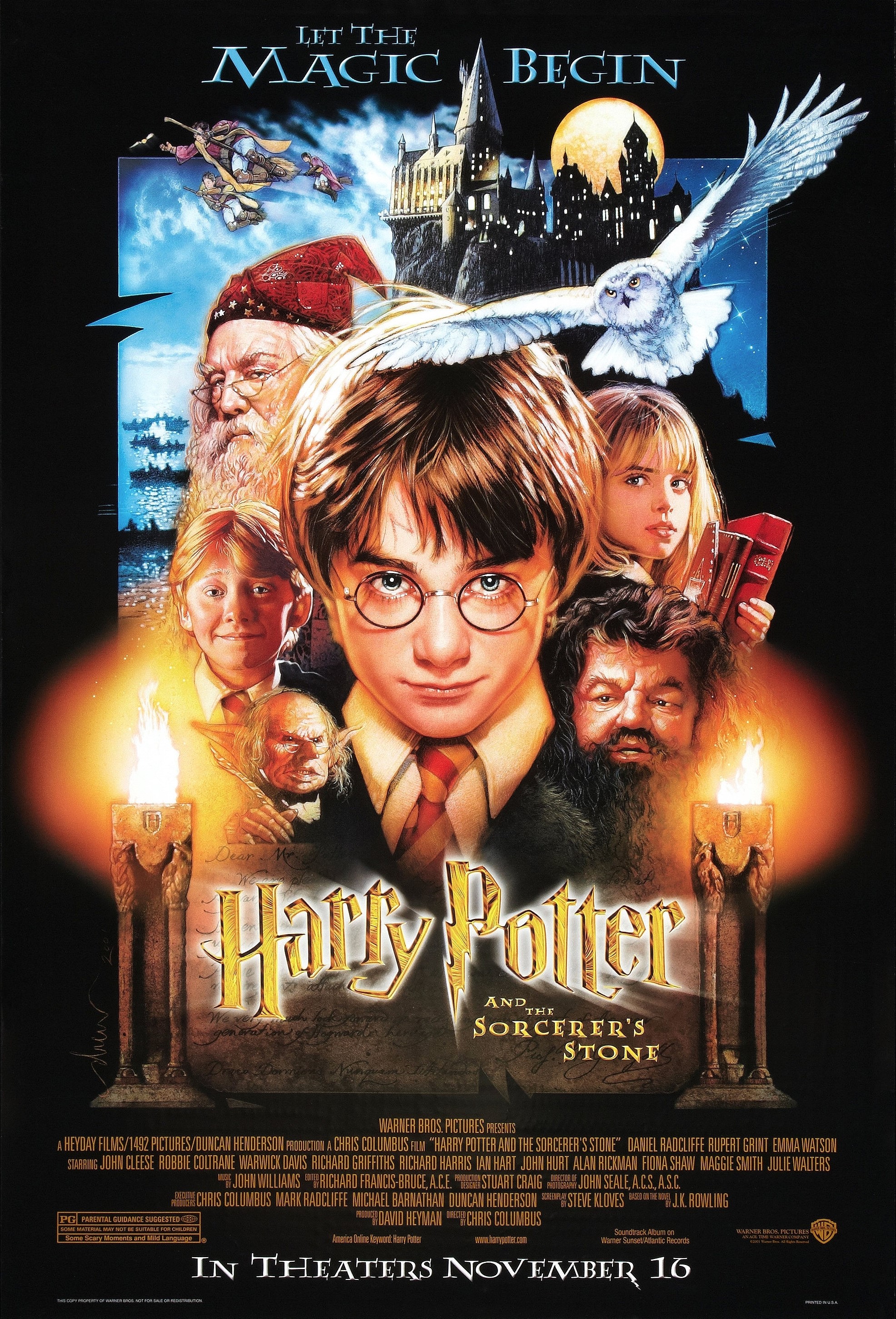
Harry Potter and the Sorcerer's Stone
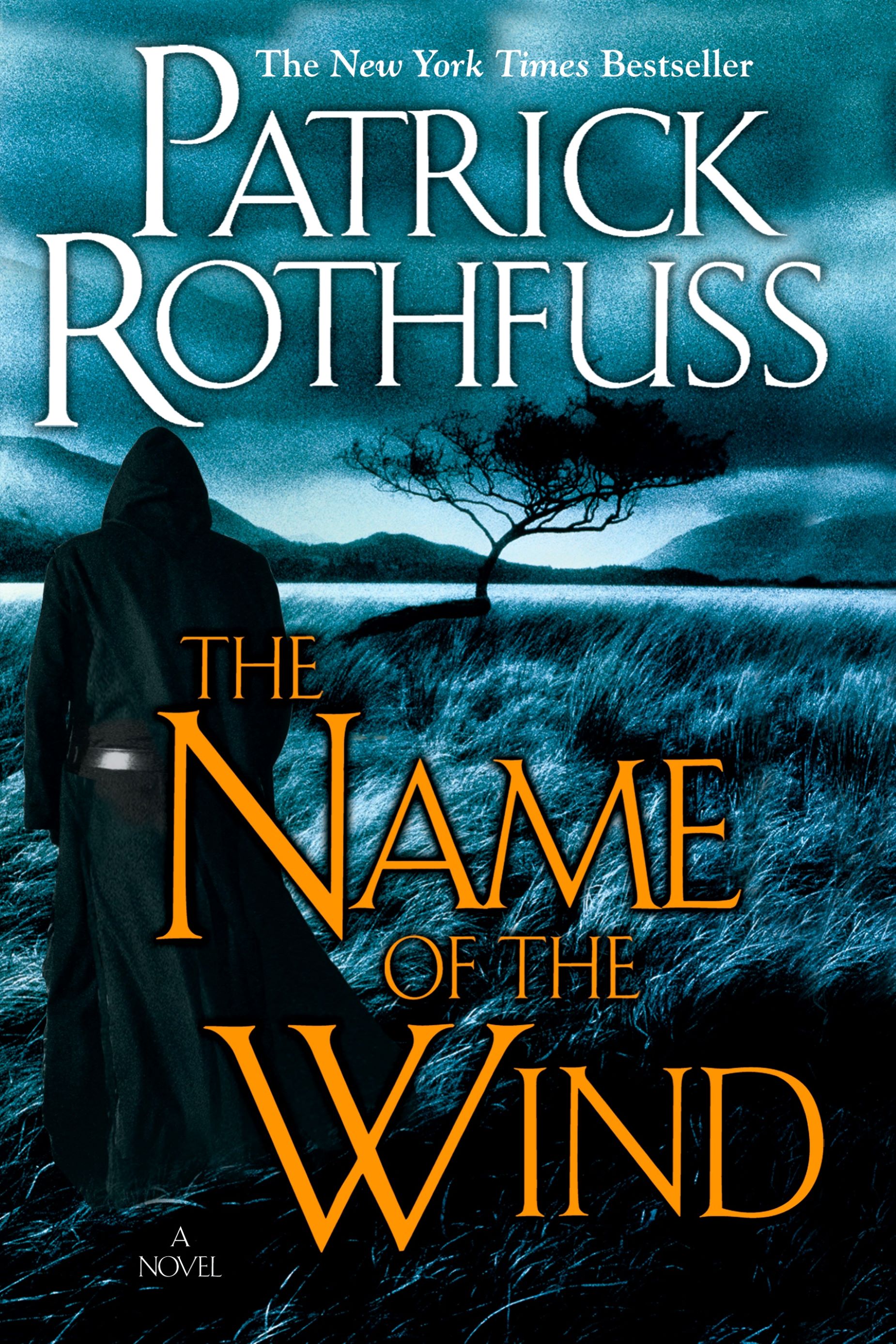
The Name of the Wind
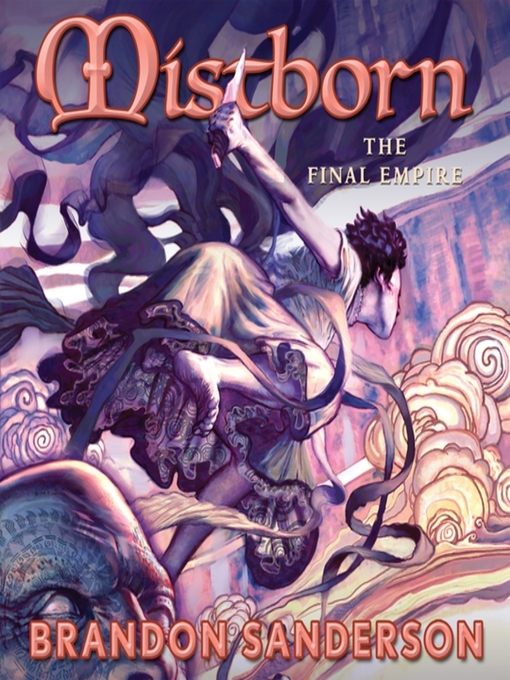
Mistborn: The Final Empire
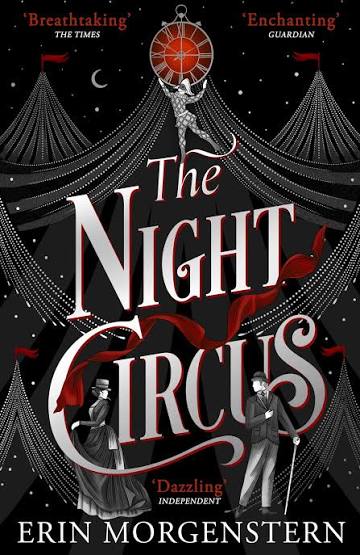
The Night Circus

|
The Hobbit |
Harry Potter and the Sorcerer's Stone |
The Name of the Wind |
Mistborn: The Final Empire |
The Night Circus |
|---|---|---|---|---|---|
|
|
|
|
|
The Hobbit, or There and Back Again is a children's fantasy novel by the English author J. R. R. Tolkien. It was published in 1937 to wide critical acclaim, being nominated for the Carnegie Medal and awarded a prize from the New York Herald Tribune for best juvenile fiction. It is recognized as a classic in children's literature and is one of the best-selling books of all time, with over 100 million copies sold.
The Hobbit is set in Middle-earth and follows home-loving Bilbo Baggins, the titular hobbit who joins the wizard Gandalf and the thirteen dwarves of Thorin's Company on a quest to reclaim the dwarves' home and treasure from the dragon Smaug. Bilbo's journey takes him from his peaceful rural surroundings into more sinister territory.
The story is told in the form of a picaresque or episodic quest;[1] several chapters introduce a new type of monster or threat as Bilbo progresses through the landscape. Bilbo gains a new level of maturity, competence, and wisdom by accepting the disreputable, romantic, fey and adventurous sides of his nature and applying his wits and common sense. The story reaches its climax in the Battle of Five Armies, where many of the characters and creatures from earlier chapters re-emerge to engage in conflict. Personal growth and forms of heroism are central themes of the story, along with motifs of warfare. These themes have led critics to view Tolkien's own experiences during the First World War as instrumental in shaping the story. His scholarly knowledge of Germanic philology and interest in mythology and fairy tales are often noted as influences, but more recent fiction including adventure stories and the works of William Morris also played a part.
The publisher was encouraged by the book's critical and financial success and, therefore, requested a sequel. As Tolkien's work progressed on its successor, The Lord of the Rings, he made retrospective accommodations for it in The Hobbit. These few but significant changes were integrated into the second edition. Further editions followed with minor emendations, including those reflecting Tolkien's changing concept of the world into which Bilbo stumbled. The work has never been out of print. Its ongoing legacy encompasses many adaptations for stage, screen, radio, board games and video games. Several of these adaptations have received critical recognition on their own merits.
Harry Potter and the Philosopher's Stone is a fantasy novel by British author J. K. Rowling. It is the first novel in the Harry Potter series and was Rowling's debut novel. It follows Harry Potter, a young wizard who discovers his magical heritage on his eleventh birthday when he receives a letter of acceptance from Hogwarts School of Witchcraft and Wizardry. With the help of his friends, Ron Weasley and Hermione Granger, Harry unravels a mystery involving the dark wizard Lord Voldemort.
The book was first published in the United Kingdom on 26 June 1997 by Bloomsbury. It was published in the United States the following year by Scholastic Corporation under the title Harry Potter and the Sorcerer's Stone. It won most of the British book awards that were judged by children and other awards in the US. The book reached the top of the New York Times list of best-selling fiction in August 1999, and stayed near the top of that list for much of 1999 and 2000. It has been translated into 85 other languages and made into a feature-length film of the same name, as have all six of its sequels. The novel has sold in excess of 120 million copies, making it the fourth best-selling book of all time.[1][2]
Most reviews were very favourable, commenting on Rowling's imagination, humour, simple, direct style and clever plot construction, although a few complained that the final chapters seemed rushed. The writing has been compared to that of Jane Austen, one of Rowling's favourite authors; Roald Dahl, whose works dominated children's stories before the appearance of Harry Potter; and the ancient Greek story-teller Homer. While some commentators thought the book looked backward to Victorian and Edwardian boarding school stories, others thought it placed the genre firmly in the modern world by featuring contemporary ethical and social issues, as well as showing overcoming obstacles like bullying.
The Harry Potter series has been used as a source of object lessons in educational techniques, sociological analysis, and marketing.
The Kingkiller Chronicle is set in Temerant, a large, fictional continent of which the known part, called the Four Corners of Civilization, is divided into several distinct nations and cultures, much of whom follow a faith vaguely similar to medieval Christianity. Coexisting alongside the mortal world is the realm of the Fae, a parallel universe inhabited by supernatural creatures which can move between the two realms only when the moon is full. Magic exists in Temerant, too, but obeys a well-defined set of rules and principles that are only exploitable by those who have trained in its professional and scientific use.
As the novel begins, the reader hears an old storyteller speaking of a famous old wizard called Taborlin the Great, who was captured by evil beings called the Chandrian. Escaping them, Taborlin fell from a great height—but since he knew the "Name of the Wind", he called it and the Wind came and set him down safely. In later parts of the book, characters are often skeptical of such stories. Some kinds of magic are taught in the university as academic disciplines and have daily-life applications (those who can afford it are able to buy magical lamps, for example, much better than the candles used by poorer people). However, most of the population does not have reliable knowledge of the magical disciplines and many still doubt that magicians can truly call upon the Wind. The Chandrian—whose appearance is supposedly heralded by flames turning blue—are often dismissed as mythical bogeymen.
In the rural town of Newarre, the Waystone Inn is managed by an innkeeper named Kote and his assistant Bast. It is revealed that Kote is actually the renowned Kvothe: an unequaled sword fighter, magician, and musician, rumored to have killed a king—earning the title Kingkiller—and caused the present war in which the civilized world is embroiled. Bast is Kvothe's assistant and student and a prince of the Fae. Kvothe has gone into hiding and assumed the identity of Kote to keep a low profile, and one night saves Chronicler, a traveling scribe, from spider-like creatures called scrael, whereupon Chronicler, recognizing Kvothe, asks to record his story. Upon consenting, Kvothe tells Chronicler it will take three days (corresponding to the planned trilogy of novels).
Kvothe begins his story during his childhood, when he lived amongst a troupe of highly reputed traveling performers known as Edema Ruh. His loving parents train him from a young age as an actor, singer and lute player. He does extremely well in all of these as in every other field to which he turns his hand. The troupe acquires the scholar and arcanist Abenthy, who trains Kvothe in science and sympathy: a discipline that creates links from one physical object to allow manipulation of another. Kvothe also witnesses Abenthy calling the wind to fend off suspicious townspeople and vows to discover the titular "name of the wind" permitting this control.
Kvothe's father, the famous bard Arliden, starts composing what was to be the greatest of his works—a ballad of the ancient tragic hero Lanre. For this composition, Arliden starts collecting all the various tales of the mythical Chandrian and tries to get at the kernel of truth behind them—without explaining how this is related to Lanre. This inquiry results in fatal consequences. When the troupe makes camp, Kvothe's mother sends him to gather sage in the surrounding woods. Upon returning, he finds his parents and all members of his troupe dead, and the all-too-real Chandrian seated around the campfire, which has turned blue. They disliked Arliden's researches and came to silence him and everybody else with whom he might have shared his findings. The eleven-year-old Kvothe is on the point of being killed by the Chandrian named Cinder when their leader, Lord Haliax, pressures them to depart due to the approach of some mysterious enemies of theirs.
The traumatized Kvothe, alive but alone, spends three years in the slums of the city of Tarbean as a beggar and pickpocket. He is nudged out of this life by hearing a storyteller recount a story of how the hero Lanre became a renegade after the death of his beloved wife, went over to the evil forces he had fought and destroyed the cities with whose protection he was charged—and then changed his name and became himself the fearsome Lord Haliax of the Chandrian. Before Kvothe can ask more, the storyteller is arrested by the dominant Church on charges of heresy.
Kvothe then resolves to get into the university, whose vast Archives include all kinds of accumulated knowledge, including, presumably, that regarding the Chandrian. Having obtained minimal funds for both clothing and travel, he sets out. En route, Kvothe becomes enamored with a talented young woman known as Denna, a fellow musician. Kvothe manages to enter the university despite insufficient funds and performs admirably as a student, but still faces poverty, as well as rivalry with the wealthy student Ambrose Jakis and the arrogant Master Hemme. A trick by Ambrose results in Kvothe's banishment from the Archives, hampering his research efforts. However, he does well in other fields of study, advancing in medicine and runic metalworking, and gaining loyal friends. Kvothe buys a lute, despite his poverty, and performs at a famous musical tavern to earn money, and meets Denna again.
Hearing reports of blue fire and murder at a rural wedding, he suspects the Chandrian and visits the site. There, Kvothe finds Denna, injured. They meet a local swineherd who tells of blue fire, and later encounter a draccus, which nearly destroys the local town before Kvothe can slay it. He does succeed in discovering why the Chandrian murdered all of the wedding's participants: the bride's father had dug in the earth and discovered an old pot on which were paintings of all seven Chandrian; they came to recover the pot and kill anyone who may have seen it.
Back at the university, Ambrose taunts Kvothe and breaks his lute. In a fit of rage, Kvothe unintentionally calls the name of the wind, breaking Ambrose's arm in the process. As a result of the confrontation, Kvothe is sentenced to further lashing but avoids expulsion. Thanks to his clear magical aptitude, he is also promoted in rank as a student under Master Namer Elodin's tutelage.
In the inn at the present day, a mercenary possessed by a supposed skin dancer attacks the patrons and kills one of them. When Kvothe seemingly fails to use magic to help, the skin dancer dies after the local blacksmith's apprentice, Aaron, strikes the possessed mercenary with a rod of iron. The first day ends when Kvothe finishes the first chapter of his story and the town settles down for the night after the commotion. At night, Bast breaks into Chronicler's room and reveals Chronicler's coming was part of his plan all along. He threatens Chronicler, demanding that he focus Kvothe on the more heroic aspects of his story in the hopes he will abandon his apathy and return to his former heroic self.
In the epilogue, it is implied Bast's fears are well-founded, as the present-day Kvothe is described as just a man "waiting to die".
Mistborn: The Final Empire is set on the dystopian world of Scadrial, where ash constantly falls from the sky, all plants are brown, and supernatural mists cloak the landscape every night. One thousand years before the start of the novel, the prophesized Hero of Ages ascended to godhood at the Well of Ascension in order to repel the Deepness, a terror threatening the world whose true nature has since been lost to time. Though the Deepness was successfully repelled and mankind saved, the world was changed into its current form by the Hero, who took the title "Lord Ruler" and has ruled over the Final Empire for a thousand years as an immortal tyrant and god. Under his rule, society is stratified into the nobility, believed to be the descendants of the friends and allies who helped him achieve godhood, and the brutally oppressed peasantry descended from those who opposed him, known as skaa.
Magic is central to the Mistborn world. The most widely known discipline of magic is called Allomancy, which allows users to gain supernatural abilities by swallowing and "burning" specific metals. Allomantic potential is a genetic trait concentrated in the nobility, though skaa Allomancers also exist due to crossbreeding between the nobility and the skaa. Normal Allomancers have access to one Allomantic power, but an incredibly rare subset of Allomancers, called Mistborn, have access to every Allomantic power.
Plot
Three years prior to the start of the novel, a half-skaa thief named Kelsier discovered that he is Mistborn and escapes the Pits of Hathsin, a brutal prison camp of the Lord Ruler. He returned to Luthadel, the capital city of the Final Empire, where he rounded up his old thieving crew for a new job: to overthrow the Final Empire by stealing its treasury and collapsing its economy.
At the beginning of the novel, Vin, a wary and abused street urchin, is recruited by Kelsier's crew after Kelsier is notified by his brother, Marsh, that she is a Mistborn. Vin is trained by Kelsier's crew to develop her Allomantic powers, which include burning pewter to strengthen the body, burning tin to enhance the senses, and burning steel and iron to gain a limited form of telekinesis over metal. She is also given the duty of spying on the nobility by attending opulent balls in Luthadel (the capital and center of the Final Empire), where she poses as Valette Renoux, niece to Lord Renoux, a nobleman working with Kelsier's crew. During these balls, she meets and falls in love with Elend Venture, heir to House Venture, the most powerful of the Luthadel noble houses. Elend flouts the rules of nobility culture and secretly plans to build a better society with his noble friends when they ascend to their respective house titles.
Kelsier hopes to conquer the city by destabilizing it with a house war between the nobility and then invading with a skaa army. Once in control, he hopes to overthrow the Final Empire by stealing the Lord Ruler's hoard of atium, a precious metal which is the cornerstone of the Final Empire's economy. The crew succeeds in starting a house war by assassinating several powerful nobles and recruiting about seven thousand soldiers to join their cause. However, about three quarters of the soldiers are slaughtered when they foolishly attack an unimportant Final Empire garrison with the hopes of divine protection from Kelsier, who has spread rumors of his "supernatural" powers. The remaining soldiers are smuggled into Luthadel by Kelsier, who intends to continue the plan. However, Marsh is discovered and seemingly killed, and Lord Renoux and his estate are seized and he is brought to be executed by the Canton of Inquisition, the police arm of the Final Empire. This Canton is made up of Steel Inquisitors, seemingly indestructible Allomancers with steel spikes driven through their eyes. Though Kelsier's crew manage to free most of Renoux's group and kill an Inquisitor, Kelsier is killed by the Lord Ruler himself in a dramatic confrontation in Luthadel's city square. Though these events appear to leave Kelsier's plan in shambles, it is revealed that his real plan was to become a martyred symbol of hope for Luthadel's superstitious skaa population. The skaa population reacts to his death by rising up and overthrowing the city with the help of Kelsier's army.
Before his death, Kelsier had attempted to unlock the potential of the "Eleventh Metal" that he had acquired, which was rumored to be the Lord Ruler's weakness. He was unable to do so before his death, and left it to Vin to finish the job. With the Eleventh Metal, Vin goes to the imperial palace to kill the Lord Ruler. She is captured by the Canton of Inquisition and left in a cell to be tortured, but Sazed, her faithful Terrisman servant, comes to her rescue. Using a magical discipline called Feruchemy, he helps Vin escape and recover her possessions. Marsh is revealed to be alive, having actually been made into a Steel Inquisitor; he betrays his fellow Inquisitors and slays them before being overpowered by the Lord Ruler. Vin fights the Lord Ruler, whom she recognizes as not the Hero of Ages, but his Terrisman advisor Rashek, who had killed the Hero and taken his place as an incredibly powerful Allomancer and a Feruchemist, the combination of which grants him incredible healing powers and eternal youth. Vin is almost destroyed by the Lord Ruler, but with hints from the Eleventh Metal and the unexpected magical aid of the mists, she manages to separate the Lord Ruler from his Feruchemical bracelets that provide him with constant youth, causing him to age rapidly. Vin uses a spear to execute the Lord Ruler, who with his last words ominously warns her of a great doom. The Final Empire collapses, though Elend is able to avoid total societal collapse by uniting Luthadel under a new system of democratic government.
The Night Circus is a fairy tale set near an ahistorical Victorian London in a wandering, magical circus that only opens at night and closes at dawn. Called Le Cirque des Rêves (The Circus of Dreams), it features exhibitions such as illusionists, fortune-tellers, and attractions that defy the laws of physics and reality. The circus has no set schedule, appearing and disappearing in random cities and towns without warning. The circus is powered by real magic, with performers frequently pulling off feats that seem impossible to spectators. In addition to showcasing the world's best magical talent, the circus acts as a sparring ground for the protégés of two powerful magicians. The world-class illusionist Hector Bowen (better known by his stage name of Prospero the Enchanter) and the enigmatic Mr. A. H.— (also known as Alexander) agree to each raise and train a young magician, who will eventually face off against the other in a battle of wills and magic. Neither protégé is given the identity of their competitor. This secretive conflict by proxy is referred to as the "game." Hector forces his daughter, Celia Bowen, to perfect her own illusionary skills through rigorous and often cruel training methods. Meanwhile, Mr. A. H.— trains his orphan ward, Marco Alisdair, to create fantastical scenes that exist only in the mind of his magic's target.
When Celia and Marco come of age, both having developed into talented magicians, they are separately recruited to join the Circus of Dreams. Celia uses her magic to entertain crowds and maintain the circus's complex network of tents and otherworldly exhibits. Meanwhile, Marco works as the assistant to the circus's producer, which prevents him from directly traveling with the circus. As the game continues, Celia and Marco suspect that their competitor is working within the Circus of Dreams. They each construct exhibitions for the circus that showcase their powers, hoping this will let them win the game. Marco also starts a romantic relationship with the circus's fortune-teller, but he and Celia eventually fall in love after having learned that they are each other's competitor. However, other performers begin to grow suspicious of the circus's powers: they never age, seem permitted to leave the circus, or have their acts fail. Tensions within the ensemble rise when one of the circus's initial investors dies under mysterious circumstances and acts begin to go wrong. When a spectator is accidentally stabbed in an exhibition, Celia resolves to end the game as quickly as possible, while also preserving the circus and those involved with it.
Celia learns from her father that the game will continue until one of the participants is unable to go on or dies. She also learns the circus contortionist, Tsukiko, participated in a previous installment of the game, winning only when her opponent committed suicide. After Celia and Marco's negotiations with Hector and Mr. A. H.— to end the competition fail, Marco comes up with a plan to use Tsukiko to entrap himself in the ever present bonfire, the source of the circus's power, which would end the contest, thus sparing the circus and its ensemble from further harm. Just as she is about to cast the spell, Celia rushes in to save him, which rips the two lovers from reality and binds them to the circus as incorporeal spirits. This triggers the Circus of Dreams to self-destruct, which is only stopped when Celia and Marco magically bind it to Bailey Clarke, a circus devotee. This arrangement restores the circus's spirit and saves it from ruin. With Celia and Marco both existing only as ghosts, the contest is declared complete via stalemate. Poppet and Widget, twin performers who were born and raised in the circus, negotiate the release of the remaining circus properties from its former producer and Mr. A. H.—. The book ends with the revelation that Poppet, Widget, Bailey, and the circus still exist in the modern day, having been preserved for over a century.
Reception
The Night Circus has been compared to Harry Potter and Twilight, as well as to Neil Gaiman, Something Wicked This Way Comes, and Jonathan Strange & Mr Norrell.[4][5][6][7]
Ron Charles writing for The Washington Post compares Morgenstern's imagery to Steven Millhauser's, albeit with "more playful and more dramatic surrealism".[8] Olivia Laing writing for The Observer compares the book to an "eminently intriguing cabinet of curiosities" with an intricate but unmoored setting and colorful but clockwork characters.[9] Laura Miller writing for Salon likewise praises the "aesthetic fantasia with all the trimmings" but not the plot itself.[10] Sarah Stegall writing for SFScope praises the vivid imagery, predicting that it should be nominated for literary awards.[11] Richard Peabody writing for the Washington Independent Review of Books describes the narrative as nonlinear, with frequent shifts in points of view, tangential vignettes, and short almost cinematic chapters.[4] Stacey D'Erasmo writing for The New York Times Book Review criticizes the lack of specificity of the imagery, describing the experience as being "continually told how magical the circus and its denizens are without ever being truly surprised, entranced or beguiled."[12]
The Night Circus was a candidate for the 2011 Guardian First Book Award.[13] It won an Alex Award from the American Library Association in 2012.[14] The novel spent seven weeks on The New York Times Best Seller list, reaching number two on the hardcover fiction list.[15]