
The Book Thief
All the Light We Cannot See
The Seven Husbands of Evelyn Hugo
The Pillars of the Earth
Pachinko

|
The Book Thief |
All the Light We Cannot See |
The Seven Husbands of Evelyn Hugo |
The Pillars of the Earth |
Pachinko |
|---|---|---|---|---|---|
|
|
|
|
|
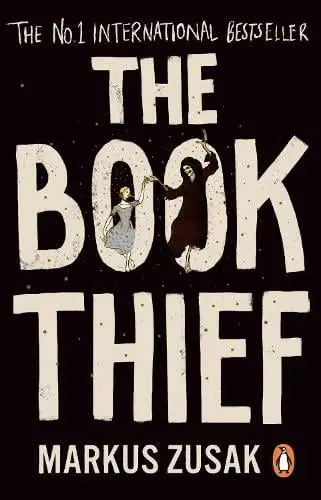
The Book Thief is a historical fiction novel by the Australian author Markus Zusak, set in Nazi Germany during World War II. Published in 2005, The Book Thief became an international bestseller and was translated into 63 languages and sold 17 million copies. It was adapted into the 2013 feature film, The Book Thief.
The novel follows the adventures of a young girl, Liesel Meminger. Narrated by Death, the novel presents the lives and viewpoints of the many victims of the ongoing war. Themes throughout the story include death, literature, and love.Narrated by Death, the story follows the young girl Liesel Meminger, living with foster parents Hans and Rosa Hubermann in Nazi Germany during World War II. Liesel steals her first book after the death of her brother, in the graveyard where he was buried. Hans develops a close relationship with her, helping her learn to read and write. Recognizing the power of writing and sharing literature, Liesel steals more books, some alongside her best friend, Rudy.
While adapting to her new home, Liesel is exposed to the horrors of the war and politics. As the political situation in Germany deteriorates, her foster parents conceal a Jewish man named Max Vandenburg. Liesel trades stories with Max in the basement, with the two finding a common interest in words. When she is collecting laundry for her mother, she forms a relationship with the mayor's wife Ilsa, who allows her to read books in her library.
Hans brings suspicion on his household that he might be a sympathizer with political adversaries of Germany. Max leaves the Hubermanns' home soon after out of fear that the suspicion could endanger him or the family. Liesel receives a gift of blank paper from Ilsa and begins writing her own story. Bombs fall on Liesel's street, killing her friends, family and neighbors. Liesel is the sole survivor because she was working on her manuscript in the basement at the time of the raid.
Many years later (what Death calls "just yesterday") Liesel dies from old age in the suburbs of Sydney, Australia with a family and many friends. She has never forgotten Hans, Rosa, Max, Rudy or her brother. When Death collects Liesel's soul, he gives her the manuscript she lost in the bombing. She asks him if he read it and understood it, but Death is unable to understand the duality of humanity. Death's last words for Liesel (and possibly the reader) are "I am haunted by humans."
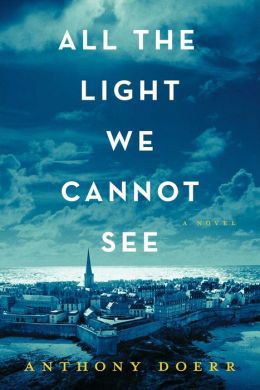
All the Light We Cannot See is a 2014 war novel by American author Anthony Doerr. The novel is set during World War II. It revolves around the characters Marie-Laure LeBlanc, a blind French girl who takes refuge in her great-uncle's house in Saint-Malo after Paris is invaded by Nazi Germany, and Werner Pfennig, a bright German boy who is accepted into a military school because of his skills in radio technology. The book alternates between paralleling chapters depicting Marie-Laure and Werner, framed with a nonlinear structure. The novel has a lyrical writing style, with critics noting extensive sensory details. The story has ethical themes, portraying the destructive nature of war and Doerr's fascination with science and nature.
Doerr drew inspiration from a 2004 train ride. During the ride, a passenger became frustrated after his telephone call disconnected. Doerr felt the passenger did not appreciate the "miracle" of long-distance communication and wanted to write a novel about appreciating said miracles. He decided to set the novel in World War II with a focus on the Battle of Saint-Malo after visiting the town in 2005. Doerr spent ten years writing All the Light We Cannot See, with much time dedicated to research on World War II.
Scribner published All the Light We Cannot See on May 6, 2014, to commercial and critical success. It was on The New York Times Best Seller list for over 200 weeks and sold over 15 million copies. Several publications considered it to be among the best books of 2014. The novel won the Pulitzer Prize for Fiction and the Andrew Carnegie Medal for Excellence in Fiction, and was shortlisted for the National Book Award. A television adaptation produced by 21 Laps Entertainment was announced in 2019 and was released on Netflix as a four-part miniseries on November 2, 2023.
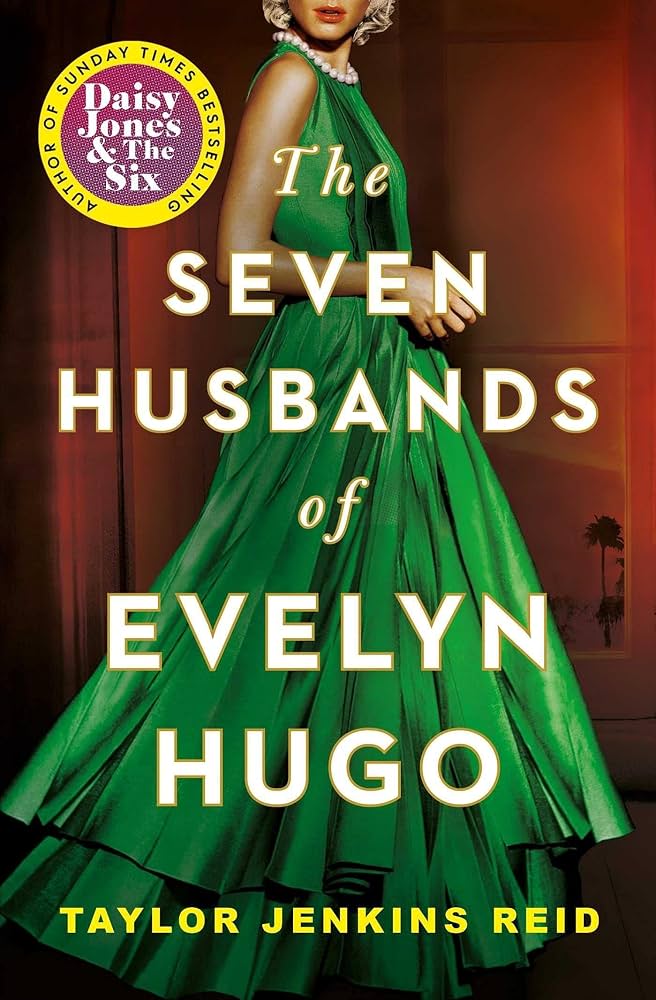
The Seven Husbands of Evelyn Hugo is catnip to anyone who loves old movies. In Evelyn, Taylor Jenkins Reid has created an amalgam of all the old glamor girls: Lana Turner and Elizabeth Taylor for their multiple marriages and off-screen shenanigans, Joan Crawford’s ruthlessness, Ava Gardner and Frank Sinatra…if you’ve read as many biographies of Hollywood stars as I have there is something or someone to recognize on every page. Which isn’t to say that the novel is warmed over Hollywood trivia. No. Reid takes these well-known facts and spins them into a brand-new story, one that, while it reiterates the ugly aspects of the film industry and the media around it, also gives a peek into how smart stars found ways to manipulate the system right back.
The plot is a clever one—a young magazine writer is offered the chance to interview a famous actress about an upcoming charity event. When Monique Grant arrives at Evelyn Hugo’s Manhattan penthouse she’s told by Evelyn that what she really wants is to write a tell-all and Monique is the writer she’s chosen. The caveat? She can’t release it until Evelyn’s death, meaning that even though Evelyn is 79, the payoff could be years away. From there, the novel proceeds through Evelyn’s retelling of her life to Monique. And what a life. Yes, seven husbands but only one true love. A personal life that often wasn’t personal at all. A career that stopped and started based solely on Evelyn’s indomitable will to succeed.
“First, you have to push people’s boundaries and not feel bad about it. No one is going to give you anything if you don’t ask for it. You tried. You were told no. Get over it.”
The Seven Husbands of Evelyn Hugo is filled with sharp writing and the kind of nuance that lifts a book from straight chick-lit (which can be great) to what one of my blogging friends likes to call brain candy. Evelyn is not a one-note, old-school actress and her story is as complicated as she is. Every time it seems as if her core has been reached Reid reveals another facet. She perfectly mixes the delicious and gossipy with the unexpected and serious. There are surprises and secrets, and it all makes for reading so deeply satisfying you won’t want it to end.
In the 1999 preface to The Pillars of the Earth, Follett tells readers that he grew up in a Plymouth Brethren family, whose worship space was very sparse. In preparing for writing, he was reading about medieval architecture, and:
... developed an interest in cathedrals. Before too long, it occurred to me to channel this enthusiasm into a novel. I knew it had to be a long book. It took at least thirty years to build a cathedral and most took longer because they would run out of money, or be attacked or invaded. So the story covers the entire lives of the main characters. My publishers were a little nervous about such a very unlikely subject but, paradoxically, it is my most popular book. It's also the book I'm most proud of. It recreates, quite vividly, the entire life of the village and the people who live there. You feel you know the place and the people as intimately as if you yourself were living there in the Middle Ages.[2]
The novel's Kingsbridge is fictional. Follett set it in Marlborough, Wiltshire; he chose that location because the cathedrals of Winchester, Gloucester, and Salisbury could be reached from there within a few days on horseback. Kingsbridge Cathedral as described is based on the cathedrals of Wells and Salisbury.[3] The Preface includes the following sources: An Outline of European Architecture, by Nikolaus Pevsner, The Cathedral Builders, by Jean Gimpel, and The Medieval Machine, by Jean Gimpel.
As well as the story of building a cathedral, and closely connected with it, the book depicts the growth of Kingsbridge from a backwoods village to a major town, the increasing wealth and assertiveness of the town's merchants and artisans, to the point of their being able to stand up to the feudal aristocracy and defend their autonomy. While Kingsbridge is a fictional town, such developments are well attested in the history of various actual towns, and form a major theme of late medieval history.
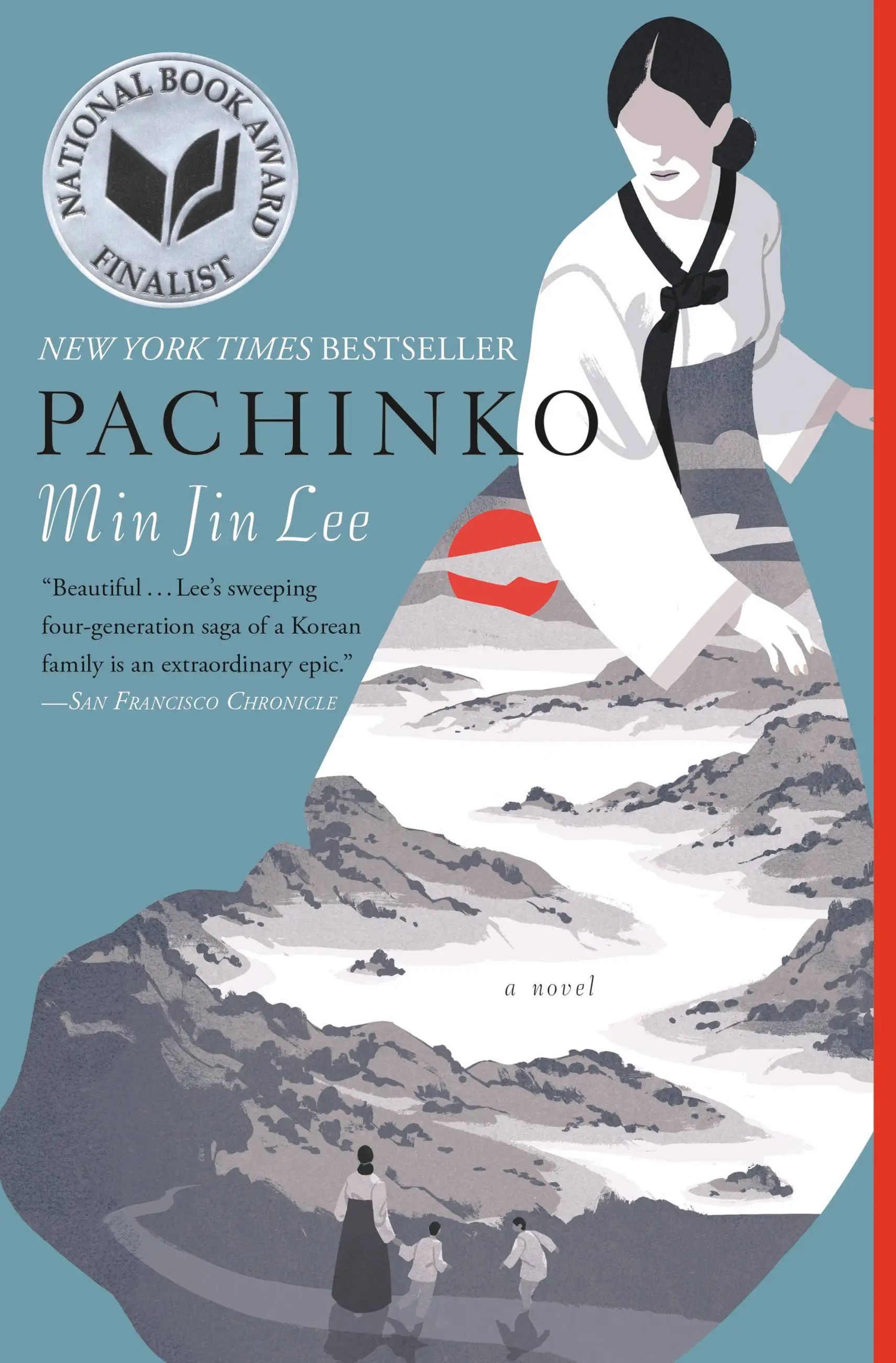
In 1883, in the little island fishing village of Yeongdo, which is a ferry ride from Busan, an aging fisherman and his wife take in lodgers to make a little more money. They have three sons, but only one, Hoonie, who has a cleft lip and club foot, survives to adulthood. Because of his deformities, Hoonie is considered ineligible for marriage. When he was 27, Japan annexes Korea, many families were left destitute and without food. Due to their prudent habits, Hoonie's family's situation is comparatively more stable, and a matchmaker arranges a marriage between Hoonie and Yangjin, the daughter of a poor farmer who had lost everything in the colonial conquest. Hoonie and Yangjin take over the lodging house after Hoonie's parents died.
In the mid-1910s, Yangjin and Hoonie had a daughter named Sunja. After her thirteenth birthday, she is raised by her mother Yangjin, her father Hoonie having died from tuberculosis. At age sixteen, Sunja is pursued by a wealthy fishbroker, Koh Hansu. However, she shows little interest in him until he saves her from an attempted sexual assault by three teenagers on her way home from the market, leading her to start trusting him. From that point on, Hansu spends weeks secretly meeting with her and sharing his stories of Osaka with her, with Sunja learning Hansu is a Zainichi Korean; therefore, knowing fluent Japanese when threatening the teenagers. After weeks of meeting her, Hansu goes with Sunja into the forest and sexually assaults her. That day marks the beginning of an abusive affair, where Hansu repeatedly uses her for sex, while Sunja believes they are meant to be married. Sunja becomes pregnant, after which Hansu reveals that he is already married but intends to keep her as his mistress. Ashamed, Sunja refuses to be his mistress and ends their relationship. Her mother finds out Sunja is pregnant, but Sunja keeps the baby's father's identity a secret. Yangjin discusses the matter with one of their lodgers, a Christian minister suffering from tuberculosis who she has been caring for since his arrival at her boardinghouse months prior. Baek Isak, the minister, believes he will die soon due to his many illnesses, and decides to marry Sunja to give her child a name and to give meaning to his life, as he believes that it is a sign from God to take care of Sunja and her future child. Sunja agrees, marries Isak, and travels to Osaka to live with Isak's brother and wife. In Osaka, Sunja is shocked to learn that Koreans are treated poorly: most are forced to live in a small ghetto and are only hired for menial jobs. Sunja's brother-in-law, Yoseb, insists on supporting the entire household on his salary. Still, Sunja and her sister-in-law Kyunghee come to learn he is in heavy debt due to paying for Sunja and Isak's passage to Osaka. To repay the debtors, a pregnant Sunja sells a watch Hansu had given her in Yeongdo. Yoseb becomes furious that the woman paid off the debt without consulting him and spends the whole night away. Meanwhile, Sunja gives birth to a son, Noa.